We earn from qualifying purchases made through links on this page. How this works
Learning to read
First books
 Pre-K and younger
My First Bob Books: Pre-Reading Skills (Scholastic)
Read-aloud books on letter shapes, sounds and patterns, for before Set 1
Check price on AmazonRead our guide
Cover: Open Library
Bob Books Set 1: Beginning Readers (Scholastic)
The first decodable books most US families meet: twelve short books using a handful of letter sounds
 Pre-K to K
Bob Books More Beginning Readers
More two- and three-letter words at Set 1’s level, for extra practice
Check price on AmazonRead our guide
Cover: Open Library
 Pre-K to K
Bob Books First Stories
Short stories at Set 1’s level (guided reading A–C)
Check price on AmazonRead our guide
Cover: Open Library
Bob Books Phonics for Early Readers
Small phonics steps at Set 1’s level
 Pre-K to K
Bob Books Rhyming Words
Word families, one vowel per book, at Set 1’s level
Check price on AmazonRead our guide
Cover: Open Library
Bob Books Set 2: Advancing Beginners (Scholastic)
The next step once Set 1 is easy: longer sentences and longer books
Bob Books Animal Stories
Two-syllable words and consonant combinations, alongside Set 2
Bob Books Sight Words: Kindergarten
30 common sight words
 Kindergarten
Bob Books Sight Words: First Grade
30 more common sight words
Check price on AmazonRead our guide
Cover: Open Library
 K to grade 1
Bob Books Set 3: Word Families
Consonant blends, two-syllable words and longer stories
Check price on AmazonRead our guide
Cover: Open Library
 K to grade 1
Bob Books Set 4: Complex Words
Vowel combinations and more consonant combinations
Check price on AmazonRead our guide
Cover: Open Library
 K to grade 1
Bob Books Set 5: Long Vowels
Long vowels and silent e; the last numbered set
Check price on AmazonRead our guide
Cover: Open Library
Phonic Books Dandelion Launchers, Stages 1–7
A decodable series that adds only a few letter sounds at a time
Phonic Books Dandelion Launchers Extras, Stages 1–7
14 more stories using the same sounds, for a child who needs more books at each stage
Phonic Books Dandelion World, Stages 1–7
14 non-fiction books on the same sounds, for children who prefer facts to stories
Phonic Books Dandelion Launchers, Stages 16–20
tch, ve, two-syllable words, -ed, -ing and -le, after Stage 15
Phonic Books Dandelion Readers, Set 1 Units 1–10
The step after Launchers: the same sounds, then blends, with longer pages
 Beginners
First Little Readers Parent Pack: Level A (Scholastic)
Patterned, picture-supported early books; not written to be fully sounded out
Check price on AmazonRead our guide
Cover: Open Library
Charge Into Reading, Stage 1 set
Decodable books aligned to UFLI’s scope, one sound per book with activity pages on that sound
Five Let’s Go! Books 1 (Dog on a Log Books), Pamela Brookes
The first book in the Dog on a Log decodable series
 Beginners
The Yak Pack: Comics & Phonics, Book 1
A decodable book with comics alongside the phonics
Check price on AmazonRead our guide
Cover: Open Library
Starfall Short-Vowel Pals
A set of 16 decodable books
Phonics First Little Readers
A set of 24 short phonics readers
Teaching guides, workbooks and letters
 Pre-readers
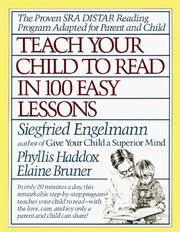
Teach Your Child to Read in 100 Easy Lessons
A scripted, parent-led course: one short lesson a day
Check price on AmazonRead our guide
Cover: Open Library
 After 100 Easy Lessons
Phonics Pathways, Dolores Hiskes
Phonics practice for checking gaps in later patterns such as ee, igh and vowel teams
Check price on AmazonRead our guide
Cover: Open Library
 After 100 Easy Lessons
Noah Webster’s Reading Handbook
An alternative to Phonics Pathways for the same gap check
Check price on AmazonRead our guide
Cover: Open Library
Bob Books Beginning Readers Workbook (Stage 1)
A workbook to use alongside Set 1
Bob Books Wipe-Clean Workbook: Beginning Readers
A wipe-clean workbook to use alongside Set 1
Bob Books Beginning Phonics Flashcards
Phonics flashcards to use alongside Set 1
Dandelion Launchers Reading and Writing Activities, Stages 1–7
Photocopiable word-building, spelling and comprehension pages to go with Launchers
Learning Resources Magnetic Uppercase & Lowercase Letters
Building and changing words (“cat” to “hat” to “hot”) on the fridge or a tray
 Primers pre-K–K; Book 1 grades 1–4
Explode the Code (workbooks)
Orton-Gillingham-based phonics workbooks a child works through independently, from short vowels to syllable types
Check price on AmazonRead our guide
Cover: Open Library
Hooked on Phonics Learn to Read
A boxed eight-level kit of workbooks, storybooks, videos and app access, with lessons of about 20 minutes
Alpha-Phonics (PLUS teacher edition), Samuel Blumenfeld
A classic single-volume phonics primer with a phonemic-awareness supplement, an alternative to 100 Easy Lessons
More on choosing an app to go with the books: the best phonics and learn-to-read apps.
Dyslexia and Orton-Gillingham
hand2mind Phonics Word-Building Magnetic Letter Tiles
Colour-coded tiles, including digraphs and vowel teams, for building and blending words
AtMini wooden sand tray with lid
Tracing a letter while saying its sound, the classic multisensory step
UFLI Foundations (teacher’s manual)
The manual for UFLI’s structured phonics programme; the free UFLI Toolbox slides and games are built to go with it
Books on dyslexia for parents
 Parents
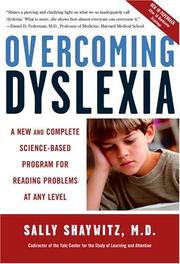
Overcoming Dyslexia (2nd ed., 2020), Sally Shaywitz
What dyslexia is, how it is identified and what good teaching looks like
Check price on AmazonRead our guide
Cover: Open Library
 Parents
Parenting a Struggling Reader, Susan L. Hall & Louisa C. Moats
A shorter, practical guide to spotting problems, getting a diagnosis and finding help
Check price on AmazonRead our guide
Cover: Open Library
Dyslexia Advocate!, Kelli Sandman-Hurley
Working with a US public school: evaluations, IEPs and your child’s rights
 Parents
The Dyslexic Advantage (revised), Brock & Fernette Eide
A strengths-focused view of dyslexic thinking; good for morale, less for teaching reading
Check price on AmazonRead our guide
Cover: Open Library
 Parents
The Dyslexia Empowerment Plan, Ben Foss
A dyslexic author’s plan for rebuilding confidence and using audio and other tools
Check price on AmazonRead our guide
Cover: Open Library
 Parents
Proust and the Squid, Maryanne Wolf
The science and story of the reading brain, with a chapter on dyslexia
Check price on AmazonRead our guide
Cover: Open Library
Wrightslaw: All About IEPs, Peter & Pamela Wright
A first, plain-language read on IEP content, including goals and progress reporting
 Parents
Wrightslaw: From Emotions to Advocacy (2nd ed.), Peter & Pamela Wright
The parent advocacy manual, for preparing for an IEP meeting and challenging a vague goal
Check price on AmazonRead our guide
Cover: Open Library
Wrightslaw: Special Education Law (3rd ed.), Peter & Pamela Wright
A legal reference to the special education law behind the IEP rules
How these fit into a lesson: Orton-Gillingham at home.
Books
Picture books and first chapter books the guides agree on, by the age they suit.
Ages 2 and 3
 Age 2
The Very Hungry Caterpillar (board book), Eric Carle
Food names, counting to five and the days of the week, with a hole to poke on every page
Check price on AmazonRead our guide
Cover: Open Library
 Age 2
Brown Bear, Brown Bear, What Do You See?, Bill Martin Jr. & Eric Carle
Colour and animal naming with a call-and-response you can hand back and forth
Check price on AmazonRead our guide
Cover: Open Library
 Age 2
Dear Zoo, Rod Campbell
A lift-the-flap board book of animal names, with a flap to reveal on every spread
Check price on AmazonRead our guide
Cover: Open Library
Guess How Much I Love You, Sam McBratney
A bedtime board book with one affectionate line to say again
 Age 2
The Going to Bed Book, Sandra Boynton
One clear bedtime sequence in rhyme, with animals doing what your child does
Check price on AmazonRead our guide
Cover: Open Library
 Age 2
Chicka Chicka Boom Boom, Bill Martin Jr. & John Archambault
An alphabet chant with a strong rhythm, where the letters are the characters
Check price on AmazonRead our guide
Cover: Open Library
 Age 2
Goodnight Moon, Margaret Wise Brown
The bedtime board book that turns up on several toddler lists
Check price on AmazonRead our guide
Cover: Open Library
Good Night, Gorilla, Peggy Rathmann
An almost wordless board book of animal names, with a joke to spot in the pictures
 Age 2
Yummy Yucky, Leslie Patricelli
First words and opposites, with deliberate silliness
Check price on AmazonRead our guide
Cover: Open Library
 3–5 (publisher)
Press Here, Hervé Tullet
Often called a toddler book, but the publisher places it at 3–5
Check price on AmazonRead our guide
Cover: Open Library
 Ages 2–5
The Very Hungry Caterpillar (picture book), Eric Carle
Counting and the days of the week, in the larger picture-book edition
Check price on AmazonRead our guide
Cover: Open Library
 Ages 2–5
Llama Llama Red Pajama, Anna Dewdney
Rhyming couplets around a bedtime separation
Check price on AmazonRead our guide
Cover: Open Library
 Ages 4–8
The Color Monster, Anna Llenas
Colour-coded feelings sorted into jars, giving a child words for emotions
Check price on AmazonRead our guide
Cover: Open Library
 Ages 3–7
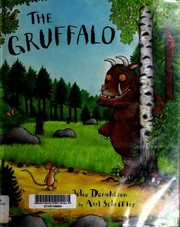
The Gruffalo, Julia Donaldson
A rhyming story that turns up on several lists for threes
Check price on AmazonRead our guide
Cover: Open Library
 Ages 3–7
Dragons Love Tacos, Adam Rubin
A silly picture book about dragons who love tacos, with subtle jokes
Check price on AmazonRead our guide
Cover: Open Library
 Ages 2–5
Corduroy, Don Freeman
A small bear’s night wander, with a search-and-find thread
Check price on AmazonRead our guide
Cover: Open Library
 Ages 3–7
Cars and Trucks and Things That Go, Richard Scarry
Busy vehicle scenes and a hunt for Goldbug on every page
Check price on AmazonRead our guide
Cover: Open Library
 Ages 3–7
All by Myself, Mercer Mayer
Short first-person sentences about daily routines and doing things alone
Check price on AmazonRead our guide
Cover: Open Library
 Ages 5–8
The Book with No Pictures, B. J. Novak
A read-aloud joke where the adult has to say silly things, for older threes
Check price on AmazonRead our guide
Cover: Open Library
Grumpy Monkey, Suzanne Lang
A short, funny book with a repeated refrain, built for talking about why Jim is grumpy
 Ages 3–7
Green Eggs and Ham, Dr. Seuss
Heavy rhyme and repetition around one repeated refusal; long but rhythmic
Check price on AmazonRead our guide
Cover: Open Library
More on each: best books for 2-year-olds and for 3-year-olds.
Ages 5 to 7
 Age 5
The Gruffalo (paperback), Julia Donaldson
A rhyming read-aloud that gives a child a part to join in on
Check price on AmazonRead our guide
Cover: Open Library
 Ages 4–8
Jabari Jumps, Gaia Cornwall
A longer picture book that leads into a talk about feelings
Check price on AmazonRead our guide
Cover: Open Library
 Ages 3–5
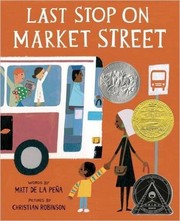
Last Stop on Market Street, Matt de la Peña
A read-aloud with rich language, best at the older end
Check price on AmazonRead our guide
Cover: Open Library
 Age 5
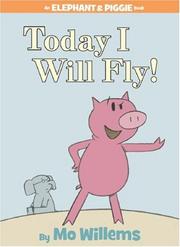
Today I Will Fly! (Elephant & Piggie), Mo Willems
Very few words a page and one clear joke, for a child starting to read alone
Check price on AmazonRead our guide
Cover: Open Library
 Ages 4–8
If You Give a Mouse a Cookie, Laura Numeroff
A predictable cause-and-effect pattern a new reader can follow
Check price on AmazonRead our guide
Cover: Open Library
 Age 5
Big Shark, Little Shark, Anna Membrino
Opposite pairs and one line a page, for a child starting to read alone
Check price on AmazonRead our guide
Cover: Open Library
 5–8 (publisher)
Mercy Watson to the Rescue, Kate DiCamillo
A gentle first chapter book with short chapters and illustrations
Check price on AmazonRead our guide
Cover: Open Library
 Ages 6–9
Junie B. Jones and the Stupid Smelly Bus, Barbara Park
A voice-driven first chapter book that is funnier read aloud first
Check price on AmazonRead our guide
Cover: Open Library
 Ages 6–9
Magic Tree House #1: Dinosaurs Before Dark, Mary Pope Osborne
A first chapter book with a low reading level and a high-interest subject
Check price on AmazonRead our guide
Cover: Open Library
 Ages 6–9
Narwhal: Unicorn of the Sea, Ben Clanton
A graphic-novel early reader a 1st grader can read alone
Check price on AmazonRead our guide
Cover: Open Library
 1st grade
Frog and Toad Are Friends (I Can Read), Arnold Lobel
An I Can Read Level 2 early reader a 1st grader can read alone
Check price on AmazonRead our guide
Cover: Open Library
 Ages 5–7
Henry and Mudge Under the Yellow Moon, Cynthia Rylant
A Ready-to-Read Level 2 early reader a 1st grader can read alone
Check price on AmazonRead our guide
Cover: Open Library
 1st grade
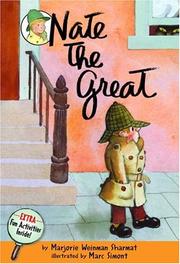
Nate the Great, Marjorie Weinman Sharmat
A Yearling early reader a 1st grader can read alone
Check price on AmazonRead our guide
Cover: Open Library
 1st grade
Hi! Fly Guy, Tedd Arnold
A Scholastic early reader a 1st grader can read alone
Check price on AmazonRead our guide
Cover: Open Library
See the Cat: Three Stories About a Dog, David LaRochelle
Three stories for beginning readers from Geisel Award-winning creators
 1st grade
Owl Diaries #1: Eva’s Treetop Festival, Rebecca Elliott
A Scholastic Branches chapter book a 1st grader can finish alone
Check price on AmazonRead our guide
Cover: Open Library
 1st grade
Dragon Masters #1: Rise of the Earth Dragon, Tracey West
A Scholastic Branches chapter book a 1st grader can finish alone
Check price on AmazonRead our guide
Cover: Open Library
 1st grade
The Princess in Black, Shannon Hale & Dean Hale
The first in a chapter-book series a 1st grader can finish alone
Check price on AmazonRead our guide
Cover: Open Library
 Ages 7–10
Dory Fantasmagory, Abby Hanlon
A longer chapter book that works best read together at 6
Check price on AmazonRead our guide
Cover: Open Library
My Father’s Dragon, Ruth Stiles Gannett
A 96-page book that works best read together
Charlotte’s Web, E. B. White
A 192-page full-colour edition to read aloud to a 6-year-old
More on each: best books for 5-year-olds and for 1st graders.
Educational toys
Babies and toddlers
Hape Pound and Tap Bench
A wooden pounding and posting toy for cause and effect, grip and aim
Fisher-Price Baby’s First Blocks
A shape sorter for matching shapes and fine motor practice
Radio Flyer Busy Buggy
A push walker and ride-on for walking and balance, once a child pulls to stand
Baby Einstein Magic Touch Piano
A touch piano for cause and effect; use it on the floor and keep the music sheets out of reach
LeapFrog Learning Friends 100 Words Book
A talking picture book for hearing first words and pointing to named pictures
Toomies Hide & Squeak Eggs
Stacking eggs, named best stacker by one parent test panel
 1½+ (LEGO)
LEGO DUPLO Classic Brick Box 10913
Large bricks for fitting, stacking and knocking down towers, plus pretend play
Check price on AmazonRead our guide
Photo: Sen, Unsplash License
 Ages 2+
Bilibo (MOLUK)
For sitting, spinning, wobbling and make-believe play
Check price on AmazonRead our guide
Photo: Alex Hochstrasser, CC BY-SA 3.0

Learning Resources Counting Crayons
Grasping coins, matching colours and sorting them into crayon cups
Step2 Rain Showers Splash Pond Water Table
A water table for pouring, moving maze pieces and cause-and-effect play
Goliath Jelly Blox Creative Kit
Squishy building blocks for fine motor and building play
Melissa & Doug Shape Sorting Cube
A wooden shape sorter for matching shapes and fine motor practice
More on each: toys for 1-year-olds and for 2-year-olds.
Preschool
 Ages 3+
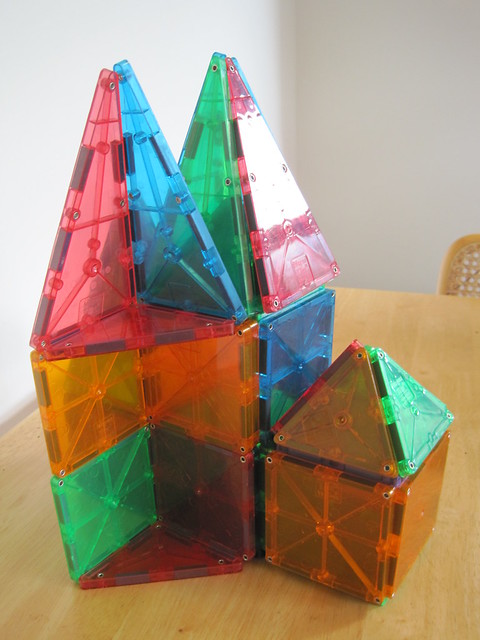
MAGNA-TILES Classic 32-Piece Set
Magnetic tiles for building, shape names and symmetry, with years of headroom; contains magnets
Check price on AmazonRead our guide
Photo: Andrew Watson (AndWat), CC BY-SA 2.0
LEGO DUPLO Bluey Pizza Girls (10469)
A DUPLO set for stacking, counting bricks and character play
Fat Brain Toys Pretendables Backyard Pizza Oven
A pretend pizza oven for serving, slicing, counting portions and asking politely
Peaceable Kingdom Count Your Chickens
A cooperative board game for counting spaces and taking turns
LEGO DUPLO Number Train – Learn to Count (10954)
A DUPLO train with 10 number bricks, for counting rather than characters
Melissa & Doug Dust, Sweep & Mop 6-Piece Set
A child-sized cleaning set for pretend play
Melissa & Doug Shape-Sorting Wooden Dump Truck
A wooden truck for posting shapes
Crayola Color Wonder Prehistoric Pals
A colouring set for early mark-making
B. toys Wooden Piano, Mini Maestro
A small wooden piano for musical play
Nene Toys Ladybug’s Garden Memory Game
A matching and memory game of the kind suggested for this age
Candy Land Kingdom of Sweet Adventures
A board game for the same age; check the label on the box
Little Tikes 3′ Trampoline
A small trampoline for gross-motor play
LEGO Classic Creative Suitcase 10713
Conventional bricks in a carry case, for building and spatial skills
Melissa & Doug Scissor Skills Activity Pad
Cutting-practice pages for building scissor control; editions vary
Learning Resources Mini Muffin Match Math
A counting and numbers toy
Learning Resources Coding Critters Ranger & Zip
A screen-free early-coding set with a physical robot, starting a year before Botley
Numberblocks MathLink Cubes 1–10
Linking counting cubes for hands-on counting; no guide names a set like this
Educational Insights Design & Drill Activity Center
A building set for spatial skills
Melissa & Doug Star Diner Restaurant Play Set
A pretend diner set for role play
Melissa & Doug Pet Vet Play Set
A pretend vet kit for role play
Skillmatics I Can Write Mat
A mat for practising letters and early writing; edition details vary
More on each: toys for 3-year-olds and for 4-year-olds.
STEM toys from 5
Plus-Plus Basic Mix Tube
Mini interlocking building blocks, not a brick system
Gears! Gears! Gears! Robots in Motion
A gear building set; on label at five, but the label ends at eight
Osmo Little Genius Starter Kit (iPad)
A tablet-based learning kit for preschoolers; needs an iPad
Osmo Little Genius Starter Kit (Fire tablet)
The same tablet-based starter kit, for a Fire tablet
Osmo Coding Starter Kit
A tablet coding game set rather than a standalone toy
Snap Circuits Beginner SCB-20
A beginner circuits kit with room to grow; needs three AA batteries
GeoSafari Jr. Talking Microscope
A talking microscope for young children; at five it is at the top of its range
Primary Science Deluxe Lab Set
A science lab set with no batteries, aimed at a younger child
Monkey Balance
A number-and-weight balancing scale game
Sum Swamp
An addition and subtraction board game for two players
Gravity Maze
A single-player marble-logic game, better for an older sibling or later
More on each: STEM toys for 5-year-olds.
Board games

Scrabble
The classic word game, named by four of the nine guides
Check price on AmazonRead our guide
Photo: thebarrowboy, CC BY 2.0

Scrabble Junior
The junior version of Scrabble, named alongside it by four guides
ThinkFun Zingo!
An early-reading game, the one the guides name most, with seats for up to six
Bananagrams
A word game where players race to spell words from letter tiles

Yahtzee
A dice game named by three of the nine guides; check the age on the box

Mastermind
A logic game named by three of the nine guides; check the age on the box
Gamewright Outfoxed!
A cooperative whodunit for deductive reasoning, where an older child helps rather than beats a younger one

Monopoly
The classic Monopoly, named by three of the nine guides with Monopoly Junior
Check price on AmazonRead our guide
Photo: Yahya, CC BY-SA 4.0

Monopoly Junior
The junior version of Monopoly, named alongside it by three guides
Periodic: A Game of the Elements
A game about the chemical elements, named by three of the nine guides
The World Game
Named by three of the nine guides; check the age and player count on the listing
Trekking the National Parks
A game themed on the national parks, named by three of the nine guides
Boggle Jr
Named by three of the nine guides; check the age on the box
 Ages 2+
HABA First Orchard
A cooperative first game for counting, matching and taking turns, playable by a 3- and an 8-year-old together
Peaceable Kingdom Snug as a Bug in a Rug
A preschool cooperative game where everyone plays on the same team
 Ages 6+
Connect 4 (Hasbro)
A two-player strategy game
Check price on AmazonRead our guide
Photo: Popperipopp, CC BY 3.0

 Ages 8+
Kingdomino (Blue Orange)
A strategy and problem-solving game for two to four players
Sushi Go! (Gamewright)
A quick card game for visual discrimination and strategic thinking
Prime Climb (Math for Love)
An arithmetic board game built on multiplication, division and primes
What each one practises: the best educational board games.
Coding
Learning Resources Code & Go Robot Mouse Activity Set
A first screen-free robot: build a maze, then code the mouse to the cheese with buttons
Code & Go Robot Mouse (mouse alone)
A second mouse to race the first, or floor mazes built from books and blocks
Rechargeable Code & Go Mouse (mouse alone)
A rechargeable second mouse that charges over USB-C
 K–1
Mouse Count, Ellen Stoll Walsh
A picture book a free K–1 lesson plan uses to introduce the Code & Go mice
Check price on AmazonRead our guide
Cover: Open Library
Learning Resources Botley 2.0 Coding Robot Activity Set
A screen-free robot programmed with a remote, from simple sequences up to loops
Botley 2.0 Coding Robot (robot only)
The robot and remote without the activity set, for a second robot or if you already have obstacles and cards
Botley 2.0 Action Challenge Accessory Pack (Learning Resources)
Adds more Botley activities later on
 Goes with ScratchJr (5–7)
The Official ScratchJr Book
A paperback built around ScratchJr, for a family that wants a book beside the tablet
Check price on AmazonRead our guide
Cover: Open Library
 Ages 7–9
DK Workbooks: Coding in Scratch: Games Workbook
A thinner Scratch games workbook for younger children
Check price on AmazonRead our guide
Cover: Open Library
 9–12 (publisher)
Coding Games in Scratch (DK, 2024 US edition)
Step-by-step game projects to build in the free Scratch editor
Check price on AmazonRead our guide
Cover: Open Library
 Goes with Scratch (about 8 and up)
Coding Games in Scratch (DK, earlier edition)
A paperback of Scratch game projects, the next book once a child moves on from ScratchJr
Check price on AmazonRead our guide
Cover: Open Library
Scratch 3 Programming Playground, Al Sweigart (No Starch, 2021)
A deeper Scratch book for children who have outgrown step-by-step projects
Coding for Kids: Python
A paperback for a child moving from blocks to typed Python

Hello Ruby: Adventures in Coding
A paperback of coding adventures, to go alongside a coding app
Check price on AmazonRead our guide
Cover: Open Library
 Ages 8+
BBC micro:bit V2
A pocket-sized programmable board with lights, buttons and sensors
Photo: SimonWaldherr, CC BY 4.0

Where each fits by age: coding for kids, a parent’s guide.
More coding robots
From a classroom floor robot at 4 to a build-it-yourself robot coded in Python, in rough age order; the last few appear in only one roundup.
Bee-Bot See & Say 6-Pack
A classroom pack of floor robots coded with seven direction buttons on the robot, no screen
 Ages 4–8
Bee-Bot Starter Set with 3 Activity Mats
A classroom Bee-Bot set with three activity mats; coded with seven direction buttons, no screen

Ozobot Evo
Codes two ways: Color Codes drawn with markers, with no screen, and block coding in the app
 Ages 5–14
Wonder Workshop Dash
An app-coded robot that arrives built and charged; about 5 hours of play per charge, battery not replaceable
Check price on AmazonRead our guide
Photo: Texas State Library and Archives Commission from Austin, TX, United States, CC BY 2.0

 6+ (maker); one list says 9–14
Makeblock mBot2 (mBot Neo)
A robot to build, then code with blocks and move to Python; 8 motor and servo ports and 10+ add-on modules
Check price on AmazonRead our guide
Photo: Mattruffoni, CC BY-SA 4.0

 8+, adult supervision under 8
Sphero Mini
An app robot coded in Draw, Blocks and Text modes, with an interchangeable shell; 45 minutes of play per charge
Sphero BOLT
An earlier Sphero coding robot the lists name alongside the Mini; app-based, not screen-free
LEGO Boost Creative Toolbox
A LEGO coding robot set the lists name; check the age and software status before buying
LEGO Education SPIKE Essential Set (45345)
Retired: LEGO Education ends sales on 30 June 2026, with software support to 2031. For a school that already owns one
Fisher-Price Code-a-Pillar Twist
Named in one roundup only; check its coding features and age before buying
Elenco Mech-5
Named in one roundup only; check its coding level before buying
JIMU Firebot kit
Named in one roundup only; we would wait for a second source
How these compare by age and screen: the best coding robots for kids.
LEGO and building sets
LEGO Classic Medium Creative Brick Box 10696
A 484-piece brick box for free building with no motor or app
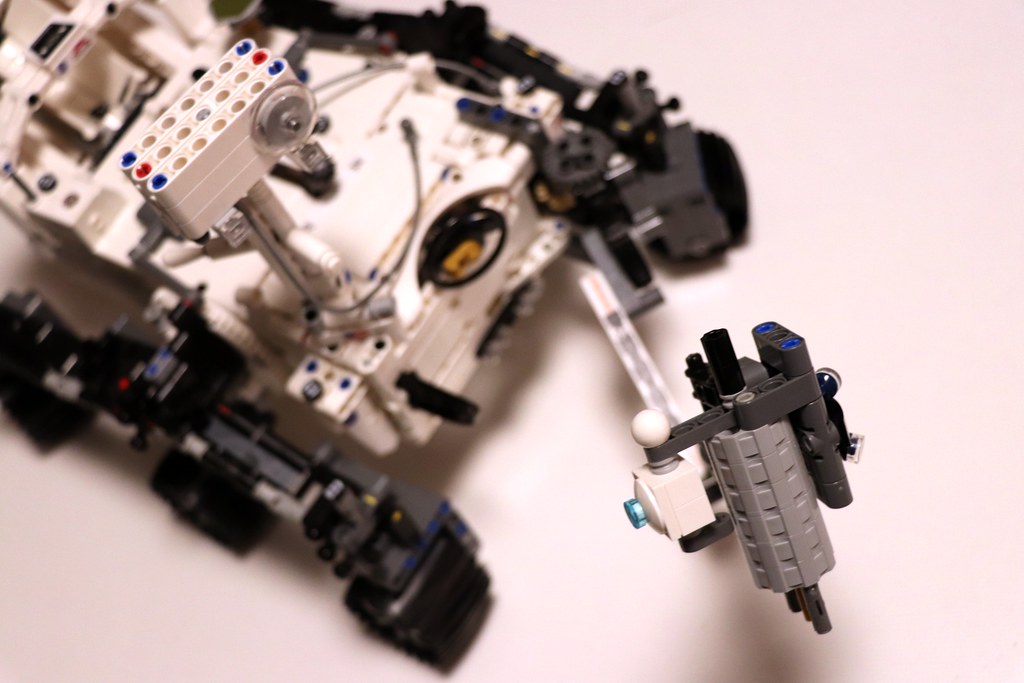
LEGO Technic NASA Mars Rover Perseverance 42158
A mechanical display model for a child who likes space; building, not coding
Check price on AmazonRead our guide
Photo: tillwe, CC BY-SA 2.0
LEGO Education SPIKE Prime 45678
Retired classroom robotics set with blocks and Python; sales end 30 June 2026
LEGO Boost 17101
An older LEGO coding set; listing unverified, so check it before buying
 Ages 10+
LEGO Mindstorms EV3 31313
An older robotics set no longer in LEGO’s listings; second-hand only
Check price on AmazonRead our guide
Photo: Klaus-Dieter Keller, CC BY-SA 3.0

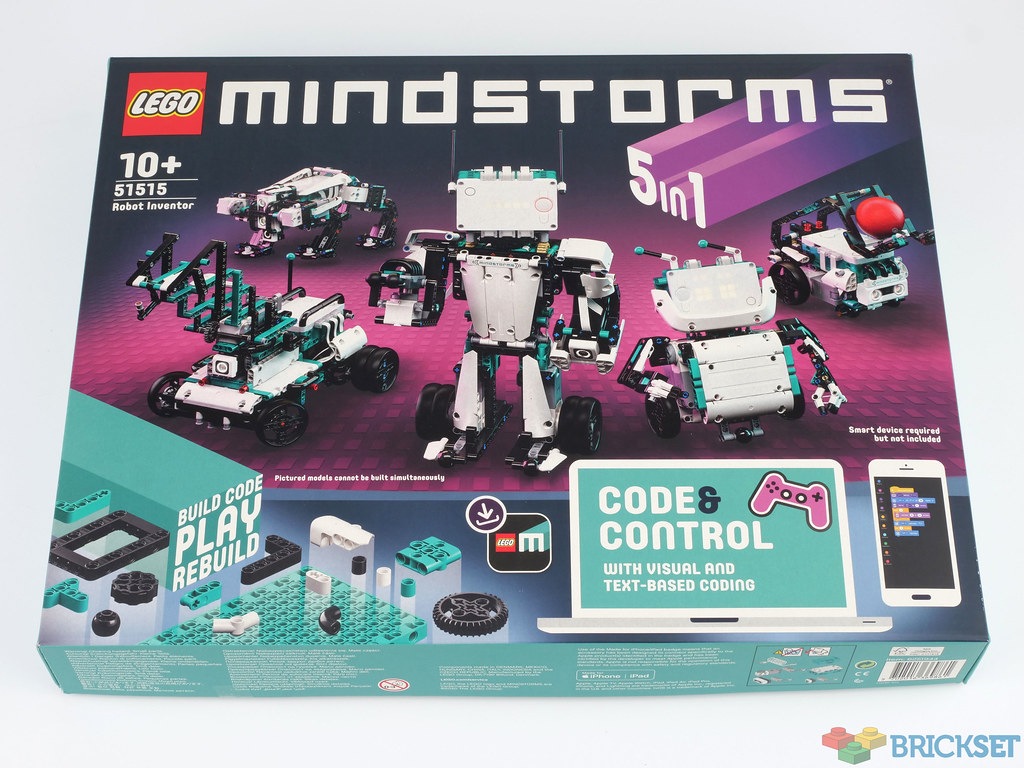 Ages 10+
LEGO Mindstorms Robot Inventor 51515
An older robotics set no longer in LEGO’s listings; second-hand only, and app support may have ended

LEGO Education WeDo 2.0 Core Set 45300
A retired classroom coding set some older roundups still recommend
Check price on AmazonRead our guide
Photo: Klaus-Dieter Keller, CC0

Which set fits which age: the best LEGO STEM sets.
Kids’ tablets
You don’t need a tablet for reading or coding apps, but a dedicated one keeps a child’s apps separate from a parent’s phone.
Amazon Fire HD 8 Kids
The first kids’ tablet most guides settle on, with a curated library rather than an open app store
Amazon Fire HD 10 Kids Pro
The upgrade once homework apps and a browser come in; check the listing for case and subscription terms
 Ages 8–12
Apple iPad 11-inch (A16)
The full App Store with Screen Time controls, for a tablet that has to last into high school; no case in the box
Check price on AmazonRead our guide
Photo: 茅野ふたば, CC BY-SA 4.0

 Ages 8–12
Samsung Galaxy Tab A9+
The standard Wi-Fi tablet behind the Kids Edition, for a child who needs a general-purpose Android tablet for school
Check price on AmazonRead our guide
Photo: Striker9498, CC BY-SA 3.0

Amazon Fire 7 Kids
The smallest Fire kids’ tablet; check the listing for screen, storage, battery and subscription terms
Amazon Fire HD 10 Kids
A 10-inch kids’ tablet while a locked app store still fits; check the listing for current specs
Amazon Fire HD 8 Kids Pro
The 8-inch tablet for older children, with a slimmer case and an approval-based app store
LeapFrog LeapPad Academy
A 7-inch learning tablet with 20 learning apps and a browser that loads only sites parents choose
Which tablet fits which age: the best tablets for kids.
Free alternatives
You can start without buying anything:
- Decodable books: many libraries stock Bob Books and other decodable series. Ask for “decodable readers”.
- Letter tiles: write letters on squares of card. Use one colour for vowels and another for consonants.
- Sand tray: a baking tray with a thin layer of salt or sugar works the same way.
- Coding: ScratchJr (ages 5 to 7) and Scratch (8 to 16) are free and ad-free. “Unplugged” games, such as giving a parent step-by-step directions across the room, teach the same sequencing as a robot.
How we chose
Quick answer
The essentials are short. For reading at home you need decodable books and letter tiles or magnetic letters; for coding, a screen-free robot at 4 to 7, then the free Scratch from about 9. Below is every product our guides link to, by topic and age, each with a link to the guide that covers it.
Every product our guides link to is listed here, grouped by topic and age. Each one has a button to the guide that covers it best, which explains what it is, who it suits and its drawbacks, and where it came from in the expert guides we compared. We haven’t tested these items ourselves yet, and we say so on each guide. Nobody pays to be listed. Prices change often, so check the current price on the retailer’s site.
Questions
Do you test everything on this list? Not yet. Each item is here because several independent expert guides recommend it, and each guide says what that recommendation is based on. When we have used something ourselves, the guide will say so.
Do I need all of it? No. For a beginning reader, a decodable set and something to build words with is plenty. Add a sand tray if your child needs more multisensory practice. For coding, one robot or the free Scratch is enough to start.
Why aren’t prices shown? Prices change daily and differ by retailer, so we link to the retailer to see the current price.