
Quick answer
Teach Your Child to Read in 100 Easy Lessons is one book of 100 scripted, 20-minute lessons for a parent and a child of 4 or older. Children read their first words around lesson 10, move to normal print from about lesson 73, and aim for roughly a second-grade level by the end.
We earn from qualifying purchases made through links on this page. How this works
What will my child be able to read, and when?
The book builds skills in a fixed order, so you can see roughly where your child should be at each stage. The map below pulls together lesson numbers the publisher gives in its FAQ, its training videos and its word list by lesson, with the points where parents most often report trouble. Lesson numbers are for the current 2022 edition unless noted.
| Stage | What your child is doing | Source | Where families stall |
|---|---|---|---|
| Before lesson 1 | Nothing yet: you practise saying each sound cleanly and blending sounds without pausing | Publisher training videos | Parents who skip this find the script harder to follow |
| Lesson 1 | Six short exercises, starting with letter sounds and oral blending | Publisher video for lesson 1 | Very young children may not sit through all six |
| Lesson 10 | Reads first whole words: am, me, sat, see | Publisher word list | Some children get bored around here; one parent review reports quitting at lesson 10 (The Homeschool Mom) |
| By lesson 13 | Reads a short story, then answers questions about it and the picture | Publisher videos | |
| Lesson 20 | Blends words that start with “quick” sounds such as c; rhyming exercises | Publisher videos | |
| After lesson 32 | Ready for the first separate storybook matched to the lessons | Publisher FAQ | |
| Lesson 53 | Reads titles and sentences “the fast way”, as whole words | Publisher video | Lessons are getting longer |
| From about lesson 60 | Longer lessons with more reading; the FAQ says later lessons take longer | Parent forums (Well-Trained Mind) | The most common stall: parents say lessons get slow and long about two-thirds of the way through |
| Lessons 73–75 | Starts moving to normal print, including how a final e changes a vowel. Words in plain print appear in the word list from lessons 74–75 | Publisher FAQ and word list; in the 1983 edition the switch begins at lesson 75 (Cathy Duffy) | Some reviewers warn the switch to ordinary print can confuse a child at first |
| Lesson 82 | Capital letters start appearing in the words they read | Publisher word list | |
| Lesson 85 | If reading fluently and accurately, can start the publisher’s free comprehension games | Publisher printables page | |
| Lesson 100 | About a second-grade reading level, per the publisher; may still stumble on long and irregular words, per the FAQ | Publisher | Parents caution that a child may not be fluent yet |
Two things to keep in mind. First, these are the book’s lesson numbers, not ages or weeks: a child who repeats lessons will reach each stage later, and that is how the program is meant to work. Second, many children start reading other books well before lesson 100; in reader reviews on The Homeschool Mom, one parent reports a child reading other books by lesson 75.
Is my child ready to start?
Most children are ready at 4 or older, according to the publisher’s FAQ, and some three-year-olds have used it. Age matters less than four skills the publisher lists. Check them before you buy:

- Your child wants to learn to read. Interest matters more than age.
- They can follow simple spoken instructions, such as “touch this” or “say it with me”.
- They speak in complete sentences.
- They can stay on one task for more than a few minutes.
Your child does not need to know letter names. The book teaches letter sounds first and letter names much later.
If your child is already in first or second grade and reads a little, the publisher gives a quick placement check: have them read the story on page 107 and count the errors. More than three errors means start at lesson 1, three errors at lesson 13, and two or fewer at lesson 25.
Signs this book may not suit your child:
- They have already learned to read another way. Cathy Duffy warns that the special letters may confuse a child who has started with ordinary print.
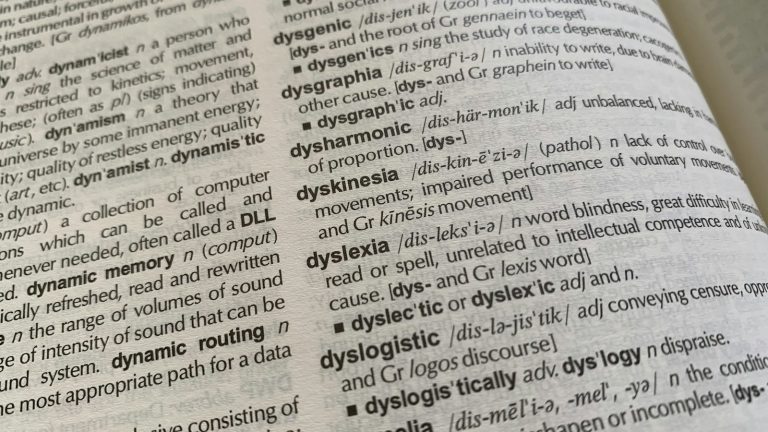
- They show signs of dyslexia, such as forgetting sounds from one day to the next. Sarah Mackenzie of the Read-Aloud Revival says it did not work for her dyslexic children and moved them to Orton-Gillingham-based programs. Read our Orton-Gillingham at home guide first.
- Your family does not speak American English. Australian speech pathologist Alison Clarke of Spelfabet notes that the book assumes an American accent, for example in vowels before r.
- You dislike reading from a script. Every word you say is written out; if that feels unnatural, the lessons will feel like a chore.
What happens in a lesson?
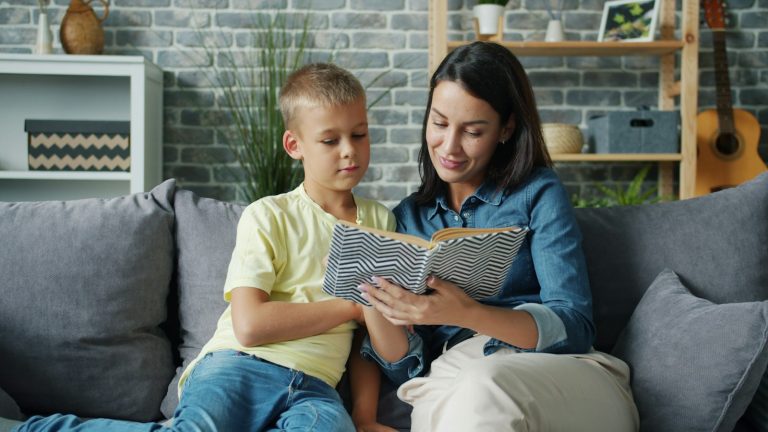
Each lesson is a script: you read the lines, your child answers, and the script tells you what to do after a mistake. The publisher suggests about 20 minutes a day, split into shorter sittings for younger children. Early lessons are short and later ones longer. A lesson moves through a few tasks:
- Sounds. Your child says the sound of each new and review letter as you point to it.
- Say it slow, say it fast. You say a word sound by sound; your child says it at normal speed. This trains blending by ear before they read.
- Word reading. Your child sounds out words on the page, then reads them “the fast way”.
- Story reading. By lesson 13, a short story built only from taught sounds, then questions.
- Writing. A few sounds or words written from your dictation.
The book uses its own letter shapes so that every word can be sounded out. According to the publisher’s FAQ, long vowels carry a line above them (a macron), letter pairs that make one sound are joined, only lowercase letters are taught at first, and look-alike letters such as b and d are drawn differently. Tricky words like was are taught as “funny words”. Clarke finds this look off-putting: “It just always looked too strange and difficult.”
Which edition do you have?
There are two versions, and the lesson numbers above differ slightly between them.
| Original (1983) | Revised and Updated Second Edition (2022) | |
|---|---|---|
| Authors | Engelmann, Haddox, Bruner | Revised by Phyllis Haddox (publisher’s author page) |
| Publisher | Simon & Schuster | Avid Reader Press / Simon & Schuster (library record) |
| ISBN | 9780671631987 | 9780671631987 (the same) |
| Pages | About 395 (library record) | 420, per Simon & Schuster |
| Move to normal print | From lesson 75 | Exercises change from lesson 73 |
| Extras | Parent introduction | New overview and Practice Guide for parents, an extra section after lesson 100 with exercises and a book list, and free videos and printables at startreading.com |
Because both share an ISBN, a library or second-hand copy could be either. A copy with a “Practice Guide” near the front is the 2022 edition. The older edition still works, and the free videos on startreading.com are useful with either. Siegfried Engelmann, who designed the original, died in 2019.
How do you keep going when it gets hard?
Stop when your child gets tired, even mid-lesson, and pick up the next day with a short review: that is the publisher’s own advice. Parents who finish the book tend to describe the same habits.

- Watch the free training videos first. The publisher’s videos show how to say each sound and how to blend without pausing, and include a three-year-old doing lesson 1.
- Split long lessons. Sounds and words in one sitting, the story later. Teacher-mom blogger Teach Beside Me suggests doubling up on good days and slowing down when a child resists.
- Repeat rather than push. If a lesson goes badly, do it again tomorrow. Mastery before moving on is the point of the method.
- Use the printables. The publisher offers free sound cards, word cards in lesson order and a 100-square progress chart for stickers.
- Add real books in the middle stretch. Decodable books such as Bob Books Set 1 or Dandelion Launchers give practice in normal print and break up the routine.
- Keep reading aloud to your child. The book’s stories are short and plain; vocabulary and a love of stories come from the books you share.
Does it actually work?
For many children it does: it teaches phonics explicitly and in sequence, the approach the National Reading Panel found best supported. But there is no independent controlled study of this book itself.
- The method’s evidence. The book adapts Direct Instruction (DISTAR), a scripted school reading program. Its best-known test is Project Follow Through, a large US study of early-years teaching that began in 1968. The National Institute for Direct Instruction, which promotes the method, says DI beat every other model. Writer Alfie Kohn points out that the evaluators found results varied more between sites than between models.
- The publisher’s own study. The publisher’s website reports a small study by co-author Haddox with 26 children. It is unpublished, so treat it as the publisher’s claim.
- Word of mouth. Journalist Emily Hanford included the book on her Sold a Story reading list because many parents told her they used it, while noting that it is not a book about the science of reading.
- Parent reports are split. Reader reviews on The Homeschool Mom range from children reading by lesson 50 to families who quit early from boredom. One reviewer says everything in the title is true except “easy”.
What comes after lesson 100?
Plenty of reading at the right level, plus teaching the spelling patterns the book does not cover. The publisher’s FAQ says children finishing the book can still struggle with larger and irregular words, and points to the pages after lesson 100 (pages 393–395) for how to introduce new reading material. The 2022 edition adds exercises, vocabulary and a recommended book list there.
- Daily reading aloud by your child from early readers and then simple chapter books. For practice books limited to the patterns your child has learned, see our best decodable books.
- Teach the remaining patterns, such as ee, igh and vowel teams. Duffy suggests Phonics Pathways or Noah Webster’s Reading Handbook to check for gaps.
- Add a spelling program. The book does not teach spelling rules.
- Try the publisher’s comprehension games, a free booklet of 15 short game-style lessons.
When is another program a better fit?
| Option | What you get | Choose it instead if |
|---|---|---|
| 100 Easy Lessons | One book, 100 scripted lessons, special letters, free videos | You want the cheapest, simplest scripted start for a young child |
| All About Reading | Orton-Gillingham-based lessons with letter tiles and its own readers, in normal print | Your child needs hands-on practice or shows signs of dyslexia; see our Orton-Gillingham guide |
| Hooked on Phonics | App lessons plus workbooks and storybooks | You want some of the teaching done on screen; see our phonics apps guide |
| Reading.com | App-based scripted lessons a parent does with the child, with e-books | You like the script but want it on a tablet |
| Bob Books or Dandelion Launchers | Decodable books, not a course | You already teach the sounds and need practice books; they pair well with 100 Easy Lessons |
FAQ
Is there an app or a PDF? We found no official app. The publisher offers free videos and printable cards and charts at startreading.com; the book itself is a paperback.
Can I skip lessons? The publisher’s placement check lets an older child start at lesson 13 or 25. Otherwise the lessons build on each other, so skipping usually leaves gaps.
Will it work for two children at once? It is written for one adult and one child. Some parents teach two together, but the error-correction script works best one to one.
Should you borrow it before you buy?
- Amazon: View on Amazon
- Your library: most public libraries hold it. Borrowing it for the first 20 lessons is a cheap way to see whether the script suits you both.
- Any bookshop: ISBN 9780671631987; Simon & Schuster lists it at $29.99 as of November 2026.
For the bigger picture of how children learn to read, start at our guide to teaching reading at home.



Ask a question or share what worked