
Quick answer
The best educational gifts build a skill a child keeps using, and the ones worth buying are the ones several independent guides pick. Here are 16 gifts, sorted by age, skill and whether they need batteries, an app or nothing at all.
At a glance
- Ages: 3–5, 5–8 and 8–12
- Inside: 16 toys, games and kits, compared by skill, maker age label, price band and power need
- Most listed: magnetic tiles, on 4 of the six gift guides we read
- Price bands: under $25 to $100+, from the makers where we could check
- Screen-free share: most of the table needs no batteries and no tablet
We earn from qualifying purchases made through links on this page. How this works
How do you choose an educational gift that gets used?
Start with the age label on the box, then ask what the gift needs before it will work: batteries, a tablet, or nothing at all. None of the six gift guides we read answers that question. Every one of them tells you what to buy; not one tells you what it takes to run.

This page is built from those six guides, read in full in November 2026: WIRED, The Mom Trotter, Homeschool of 1, My eLearning World, We Are Teachers and Good Housekeeping. A seventh, Best Products, was read earlier, before its page went offline; because its URL could not be recovered, no count or fact here rests on it. We counted which gifts appear on more than one list, then checked each pick’s age label and price against the maker’s own page. Where the maker’s page would not load, the table says so. We have not used any of these gifts ourselves; the About this guide section explains the method in full.
No gift appears on all six lists. The most-listed thing is a category — magnetic tiles — and the guides disagree on brand and piece count, so the entry below is the category, not one box. That is why every row carries an age label, a price band, a power need and a count. A gift on two lists is corroborated; a gift on one is one editor’s opinion.
The age label is the first thing to check: toys for children under 14 must meet ASTM F963, which is mandatory under 16 CFR 1250.
Which educational gifts do the most lists agree on?
Magnetic tiles turn up on four of the six lists we read. National Geographic science kits, ThinkFun Gravity Maze and Wonder Workshop Dash each turn up on three. Nothing appears on all six.
Two patterns are worth knowing. Coding is the biggest single cluster on any one list — 8 of The Mom Trotter’s 31 picks are coding or robotics. And the lists that look most different are often just scoped differently: We Are Teachers’ 25 picks are all for first grade, roughly ages 6 to 7, which is why they barely overlap with the gift guides.
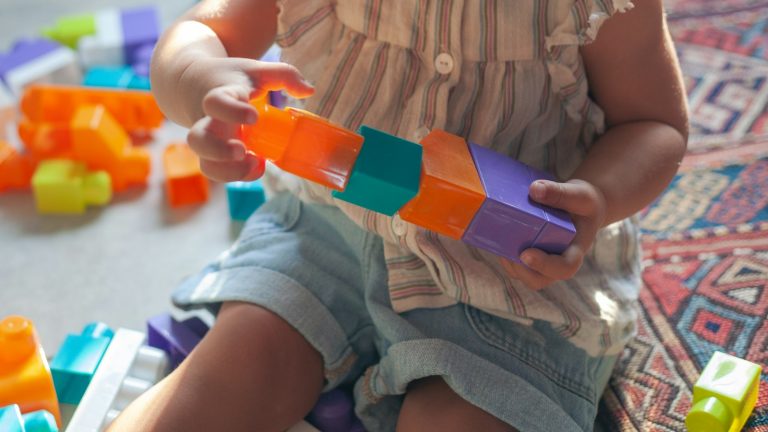
Magnetic tiles are a category rather than a single product. MAGNA-TILES lists its Classic 32-piece set at $49.99 as of November 2026, with a suggested age of 3 to 99, but the other lists name different makers and different piece counts, so compare what is in the box before you compare price.
Our pick
MAGNA-TILES Classic 32-Piece
Who it’s for: children within the maker’s suggested 3–99 age range.
- Magnetic tiles appear on 4 of the six gift guides we read.
- Maker’s age label is 3–99, from Magna-Tiles’ own page.
- The maker’s own price is $49.99 for the 32-piece set, checked November 2026. Check price on Amazon
Which educational gifts suit a 3- to 5-year-old?
At this age the CDC’s activity guidance points at the low-tech end. Its milestones for 4-year-olds include pretend play, asking to play with other children, naming colors and telling what comes next in a familiar story, and its activity guidance for the age is dress-up clothes, blocks and pretend-play props.
Gift finder, ages 3–5.
| Skill | Pick | Maker age label | Price band | Power | On lists |
|---|---|---|---|---|---|
| Building | MAGNA-TILES Classic 32-Piece | 3–99 | $25–50 ($49.99) | None stated by maker (unconfirmed) | 4 |
| Building | Geomag Magicube | 1–5 (unconfirmed) | $25–50 (unconfirmed) | None | 2 |
| Building and pretend play | Lovevery The Block Set | 12 months+ (unconfirmed) | $100+ (unconfirmed) | None | 2 |
| Early science | GeoSafari Jr. Talking Microscope | 3–5 (unconfirmed); Good Housekeeping says 4+ | $25–50 (unconfirmed) | Batteries | 2 |
| Early math | hand2mind Numberblocks MathLink Cubes | 3+ (unconfirmed) | Under $25 (unconfirmed) | None | 2 |
| First coding | Learning Resources Coding Critters Ranger & Zip | 4+ (unconfirmed) | $25–50 (unconfirmed) | None | 2 |
Four rows carry an unconfirmed label because the maker’s page would not load when we checked: Geomag, Lovevery, hand2mind and Learning Resources. Treat those ages as the label on the box rather than a fact we verified. The microscope is the one row where two sources disagree — the listing says 3–5 and Good Housekeeping says 4+.
If you want more options at the low-tech end, our guide to the best educational toys for 3-year-olds goes deeper.
Which educational gifts suit a 5- to 8-year-old?
Five to eight is where learning gifts split in two: the ones that run on their own, and the ones that borrow your tablet. Botley is the screen-free route: code goes in on a handheld remote programmer. Every Osmo kit needs an iPad or Fire tablet plus the Osmo Base, so its real cost includes a device you may not own. Osmo’s own store prices the Coding Starter Kit (ages 5–10) at $119.99, the Genius Starter Kit (ages 6–10) at $99.99 and the Little Genius kit (ages 3–5) at $89.99, as of November 2026.

Gift finder, ages 5–8.
| Skill | Pick | Maker age label | Price band | Power | On lists |
|---|---|---|---|---|---|
| First coding | Learning Resources Botley the Coding Robot 2.0 Activity Set | 5+ (per Homeschool of 1; maker page not reachable) | $50–100 (unconfirmed) | Batteries, no screen | 2 |
| Coding with a tablet | Osmo Coding Starter Kit | 5–10 | $100+ ($119.99) | App + tablet | 2 |
| Math and spelling | Osmo Genius Starter Kit | 6–10 | $50–100 ($99.99) | App + tablet | 2 |
| Open-ended building | Plus-Plus 600-piece | 5+ | Under $25 (unconfirmed) | None | 1 |
| Logic and building | ThinkFun Roller Coaster Challenge | 6+ (unconfirmed) | $25–50 (unconfirmed) | None | 2 |
Our pick
Learning Resources Botley the Coding Robot 2.0 Activity Set
Who it’s for: a child within the listed 5–7 age range whose coding toy should not need a screen.
- Code goes in on a handheld remote programmer; no app or tablet involved.
- On 2 of the gift guides we read. Our full Botley 2.0 guide covers the secret codes and what to check when it will not run. Check price on Amazon
For a wider net at this age, our guide to the best STEM toys for 5-year-olds sorts kits by what they teach, and the coding path by age shows where a first robot sits before Scratch.
Which educational gifts suit an 8- to 12-year-old?
Eight is the age the toy-safety rules are drawn around, so read this band’s labels closely. Small magnets are permitted in educational toys for ages 8 and up when the toy carries the required magnet warning label (ASTM F963 4.38). Children this age are also still covered by the full ASTM F963 rule, including third-party testing, which applies to toys for children 12 and under and not to toys aimed at teenagers. The CPSC’s toy-safety pages spell out both.
Gift finder, ages 8–12.
| Skill | Pick | Maker age label | Price band | Power | On lists |
|---|---|---|---|---|---|
| Circuits | Snap Circuits Jr. SC-100 | 8+ (per Homeschool of 1; maker page not reachable) | $25–50 (unconfirmed) | Batteries | 2 |
| Strategy and logic | ThinkFun Gravity Maze | 8–12 (unconfirmed) | $25–50 (unconfirmed) | None | 3 |
| Robotics | Sphero BOLT+ | 8+ | $100+ (unconfirmed) | Not stated by maker | 2 |
| Engineering | Thames & Kosmos Bionic Robotic Arm | 10+ with help, 14+ solo | $50–100 ($54.95) | None | 1 |
| Chemistry | National Geographic Science Magic Kit | 8–12 (unconfirmed) | $25–50 (unconfirmed) | None; adult supervision | 2 |
Two rows deserve a second look before you buy. Snap Circuits’ 8+ label is the one Homeschool of 1 states, and we could not reach the maker’s page to confirm it. The Bionic Robotic Arm is the most demanding build here — 297 parts, labeled 10+ with help and 14+ solo, and no battery. Thames & Kosmos lists it at $54.95 as of November 2026.
Our pick
ThinkFun Gravity Maze
Who it’s for: an 8- to 12-year-old who likes puzzles, and a parent who wants a gift with no screen.
- On 3 of the lists we read, the highest count for this age band.
- A falling-marble logic game, per the listing — build the path, then test it.
- No batteries, no app. Check price on Amazon
If your child would rather play than build, our educational board games guide covers that end, and the coding robots guide goes deeper on the robotics rows.
What should you check before you buy an educational gift?
Most of it comes down to two things: the age label and the parts. These are the checks the CPSC publishes, in the order we would run them.

- For a child under 3, no small parts. Toys for children under 3 may not contain small parts, tested with the 16 CFR 1501 small-parts cylinder.
- For a child under 8, no sharp edges or points. ASTM F963 sections 4.7 to 4.9 apply.
- Magnets: 8 and up, with the warning. Small magnets are permitted in educational toys for ages 8 and up only when the toy carries the required magnet warning label (ASTM F963 4.38) — and magnetic tiles are among the most-listed gifts on this page, so read that box.
- Batteries: no way in. Battery-operated toys must be designed so children cannot reach the batteries (ASTM F963 4.25). That covers every robot and light-up kit in the tables.
None of this replaces the label on the box in your hand.
What makes an educational gift keep being used?
Play is the thing a gift is trying to buy time for, and the guidance is clear about what it does. The AAP’s position on play is that play builds social-emotional, cognitive, language and self-regulation skills, and that playing with your child builds the safe, stable relationships children need to thrive.
The practical reading for a gift is that the adult can be part of the play. Before you buy, ask whether you will actually sit down and play it with them.
What didn’t make the table, and why?
Three gaps are worth naming.
Dash. Wonder Workshop’s Dash is on three of the lists and has an Amazon listing, but we could not verify a maker age label or a current price band, so it stays out rather than sitting in the table with guessed numbers.
Subscription crates. A monthly box appeared on just one of the six lists. That is not enough agreement to recommend one, and the price we found for it is more than a year old and was never confirmed on the maker’s own site.
Books. No single title appeared on more than one list, so no book earned a row. That does not make books a poor gift; it means no two guides agreed on one. Our guides to books for 5-year-olds and books for 8-year-olds do that job, and decodable books cover the reading-practice end.
One more thing about this search: not everything ranking for it is a publication. Gift Grade Guide labels itself an advertorial, invents star ratings and vote counts, and gets prices wrong — it lists a Magna-Tiles 100-piece set at $49.99, which is Magna-Tiles’ own price for the 32-piece set. That is why no price on this page comes from a marketplace listing.
Common questions about educational gifts
Are educational gifts worth it? The AAP’s guidance is that play builds social-emotional, cognitive, language and self-regulation skills, and that playing with your child builds the relationships children need to thrive. Whether a particular gift is worth it depends on whether your child uses it, which is why the age label and the running cost matter more than the claims on the box.
What is a good educational gift for a 3-year-old? A plain block set or pretend-play props: the CDC’s activity guidance for 4-year-olds names dress-up clothes, blocks and pretend-play props, and the 3–5 table above leads with building sets. Our guide to the best educational toys for 3-year-olds has more at that age.
Do learning gifts need an app? No. Most of the table runs on nothing or on batteries. Two rows need a tablet, and both are Osmo kits; Sphero’s own page describes BOLT+ as a coding robot but does not say whether an app is required, so that row stays unconfirmed.
My child is 7 and struggling to read. Is a toy the right gift? Not on its own. Reading gifts work best when they match what a child is being taught, so start with decodable books or phonics apps rather than a general learning toy.



Ask a question or share what worked