Quick answer
The best Montessori educational toys are simple, hands-on materials such as stackers, shape sorters, puzzles, object-permanence boxes, blocks and practical-life activities. Our tally found stackers or nesting toys in 6 of 8 guides, and shape sorters or shape puzzles in 5 of 8.
We earn from qualifying purchases made through links on this page. How this works
How we chose these Montessori toys
We compared eight published Montessori-toy guides and tallied the toy types they recommended. The most consistent categories were stackers and nesting toys, shape sorters and puzzles, wooden puzzles, object-permanence toys, blocks, practical-life activities and sensory materials.
The table below is our own comparison of the toys and materials that appeared in the research. It keeps commercial Montessori-style toys separate from materials sold by a Montessori-linked maker.
The tally identifies agreement between guides. It does not prove that any individual toy causes a developmental gain.
Which Montessori educational toys do the top lists agree on?
| Practice group | Toy or material | Maker age label | Material | Maker price band | Montessori-linked or Montessori-style |
|---|---|---|---|---|---|
| Fine-motor and practical life | PlanToys Stacking Ring | 12 months+ | The maker page describes it as an eco-friendly product but does not specify the material in the fetched product text | $29.99 as of November 2026 | Montessori-style; PlanToys has a Montessori-Inspired collection but is not presented here as an official Montessori-material maker |
| Fine-motor and practical life | Hape Counting Stacker | 12 months+ | Plywood, Schima, string and iron | Maker price not shown | Montessori-style |
| Fine-motor and practical life | Lovevery Play Kits | Birth–5 years, by kit | Natural materials; exact materials vary by kit | $88 per kit for 0–12 months, every two months; $132 per kit for ages 1–4, every three months, as of November 2026 | Commercial Play Kits; the cited maker page does not establish a Montessori connection |
| Sorting and shapes | Fisher-Price Montessori Object Permanence Box Sort & Find | Maker age confirmation not found | Material not confirmed in the cited source | Maker price not confirmed | An American Montessori Society connection was reported by Good Housekeeping, but independent confirmation was not found |
| Sorting and shapes | Fat Brain Toys Geometry Puzzle | Maker age confirmation not found | Wood according to the editorial listing | Maker price not confirmed | Montessori-style |
| Counting and letters | Nienhuis number rods, sandpaper letters and movable alphabet | Nienhuis groups products by 0–3 and 3–6 age bands; exact labels vary | Exact material varies by item | Maker price not confirmed | Montessori-linked maker. Nienhuis says its materials were developed through collaboration involving Maria Montessori and Albert Nienhuis |
| Sensory play | Textured balls, wooden rattles and sound cylinders | Use the exact maker label | Material varies | Price varies by maker | Montessori-style unless sourced from a Montessori-material maker |
| Sensory play | Nienhuis sensorial materials | Exact age label varies by item | Material varies by item | Maker price not confirmed | Montessori-linked maker |
The most frequently recommended category was stackers, stacking rings or nesting toys: 6 of the 8 guides included one. Shape sorters or shape puzzles appeared in 5 of 8, as did wooden or knob puzzles. Object-permanence boxes or ball-drop toys, blocks, practical-life activities and sensory toys each appeared in 4 of 8 guides.
What are the best Montessori-style picks from the tally?
These are recommendations based on the research tally and the product facts available from makers or published guides—not hands-on testing.

Our pick
PlanToys Stacking Ring
Best for a family looking for a product in a frequently recommended category.
- PlanToys lists it for children from 12 months.
- It is a stacking-ring activity in the category recommended by 6 of 8 guides.
- The maker lists a price of $29.99 as of November 2026 and provides ASTM and EN71 test-report links.
Our pick
Fisher-Price Montessori Object Permanence Box Sort & Find
Best for a child who is ready for a simple object-permanence and shape-sorting activity.
- Good Housekeeping lists it for ages 1+ and describes the shape-sorting and reappearance activity.
- Object-permanence boxes or ball-drop toys appeared in 4 of 8 guides.
- An American Montessori Society connection was reported by Good Housekeeping, but independent confirmation was not found.
Our pick
Hape Counting Stacker
Best for a family seeking a counting and sorting material with a maker-provided age label.
- Hape lists it for children from 12 months.
- The official information describes an 11-part stacker made with plywood, Schima, string and iron.
- Its maker price was not shown in the fetched product page.
What should a Montessori preschool toy practice?
A useful way to shop is to start with the action your child will repeat, rather than the word “Montessori” on the package.
Fine-motor skills and practical life
Look for stackers, nesting toys, pouring activities, dressing activities and other simple materials organized around those activities. Practical-life activities appeared in 4 of 8 guides.
The American Academy of Pediatrics groups fine-motor and manipulative materials among traditional play materials. Its clinical report says toys are most useful when they support “caregiver-child interaction, pretend play, problem-solving, language and physical activity.”
Do not treat a product description as independent proof of a learning outcome. For example, PlanToys lists visual, coordination, mathematical, concentration, creative and fine-motor development as product-development factors for its Stacking Ring. Those are maker claims, not peer-reviewed evidence that the toy produces those outcomes.
Sorting, shapes and puzzles
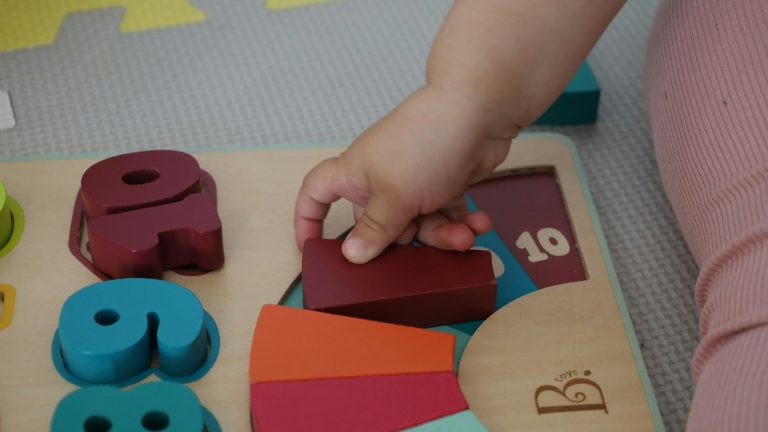
Shape sorters or shape puzzles appeared in 5 of 8 guides. Wooden puzzles or knob puzzles also appeared in 5 of 8.
The AAP specifically names blocks, shapes and puzzles as traditional toys that can support problem-solving, fine-motor skills, language and early mathematics. That is guidance about the type of play, not a guarantee about a particular brand.
If you buy a shape sorter or puzzle, follow the maker’s age label. The AAP says age recommendations help parents judge safety, playability and developmental appropriateness.
Counting and letters
Counting toys or number materials appeared in 3 of 8 guides. Alphabet or sandpaper-letter materials appeared in 2 of 8.
Nienhuis organizes its Montessori materials into areas including practical life, sensorial, language and mathematics. It groups products by 0–3 and 3–6 age bands, but the exact age label and material vary by item.
The research notes do not establish that a commercial counting toy or letter material independently improves later academic performance.
Sensory play and open-ended building
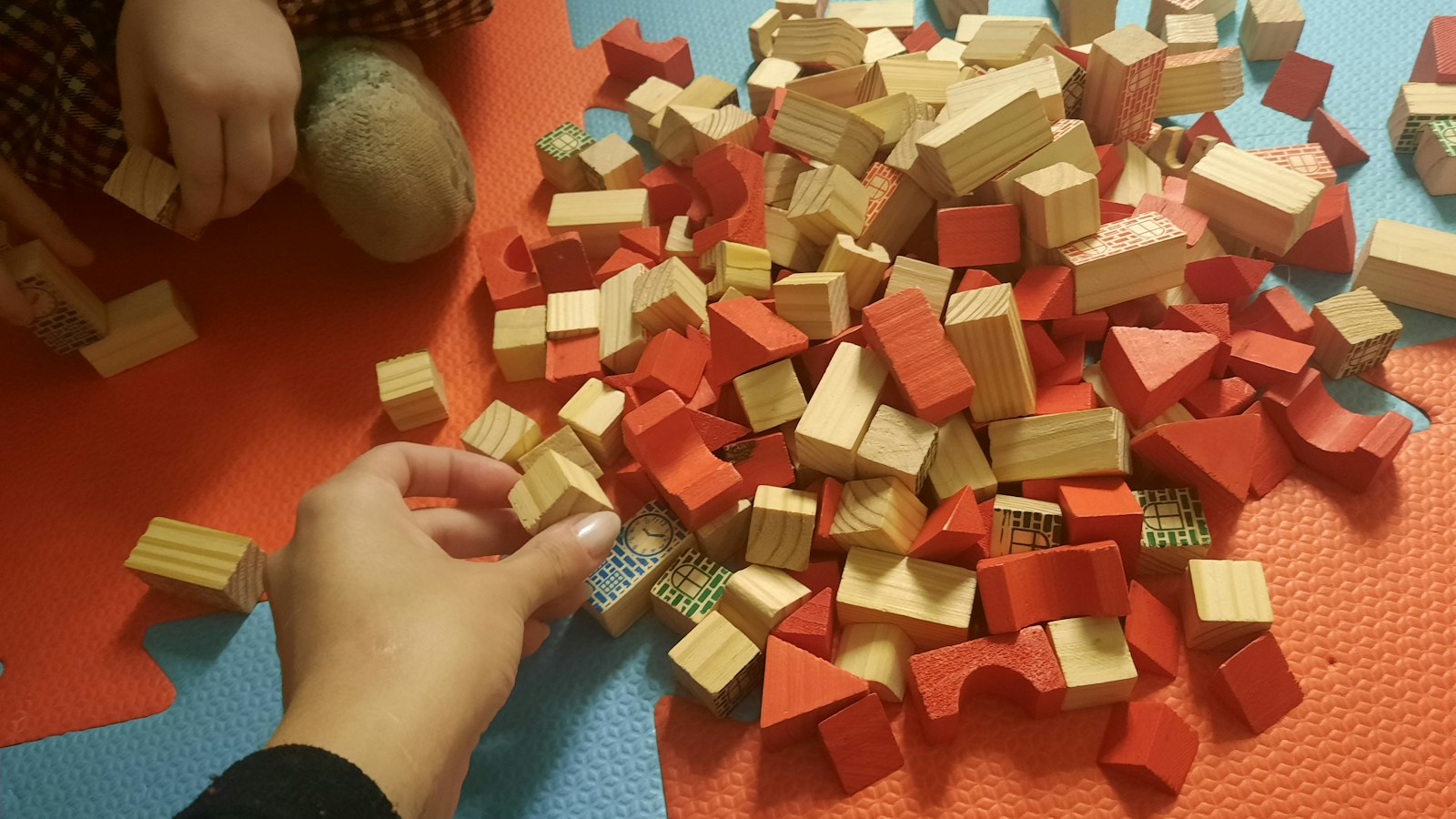
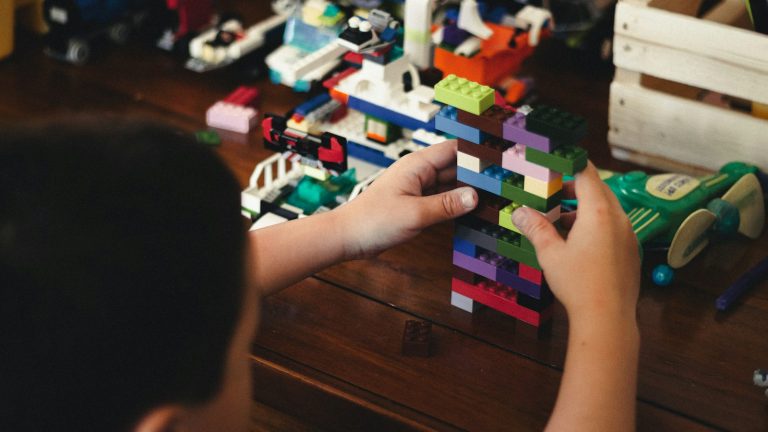
Sensory toys, rattles or textured balls appeared in 4 of 8 guides. Wooden blocks or open-ended building toys also appeared in 4 of 8.
The AAP recommends toys that are not overstimulating and encourage children to use their imaginations. It also says digital toys should not replace face-to-face play and that claims about educational benefits from some interactive media are unsubstantiated.
Is Montessori education proven to make a toy work better?
No. Peer-reviewed Montessori research studies whole educational programs, not whether a particular commercial toy causes a developmental gain.

Montessori education was developed by Italian physician and educator Maria Montessori more than a century ago. The American Montessori Society describes quality Montessori programs as including multi-age classrooms, trained teachers, specially designed hands-on materials, student-directed work and uninterrupted work periods.
A later peer-reviewed review described Montessori research as promising but limited by differences in study design and implementation.
That means a toy can resemble a Montessori material without recreating a Montessori classroom. “Montessori” on a product label is not, by itself, evidence of a developmental effect.
What safety checks matter for Montessori toys?
Check the exact product’s maker label before giving it to a child. Age labels are relevant to safety, playability and developmental appropriateness.
For children under 3:
- Keep loose small objects away from the child. The AAP says toy parts should be larger than a child’s mouth to reduce choking risk.
- Avoid accessible button or lithium-coin batteries and high-powered magnets.
- Follow the maker’s age label and supervision instructions.
- If you have concerns about your child’s development, talk with a doctor. The CDC says its milestone checklists are not substitutes for standardized developmental screening.
This is general information, not professional or medical advice.
Are Montessori toys always made of wood?
No. The Montessori Method guide says Montessori-style toys often use natural materials, but toys do not have to be wooden.
The more useful questions are whether the toy is appropriate for the child’s age, safe to use, and suited to the type of play you want to encourage. The AAP recommends matching toys to a child’s developmental abilities while also encouraging new skills.
Which Montessori toys should you compare first?
| If you want to practice… | Compare first | Age or price information |
|---|---|---|
| Stacking and fine-motor play | PlanToys Stacking Ring | 12 months+; $29.99 from the maker as of November 2026 |
| Counting and color sorting | Hape Counting Stacker | 12 months+; maker price not shown |
| Object permanence and shape sorting | Fisher-Price Montessori Object Permanence Box Sort & Find | Maker age label not confirmed |
| Geometry and knob-puzzle play | Fat Brain Toys Geometry Puzzle | Maker age label and price not confirmed |
| A rotating set of materials | Lovevery Play Kits | Birth–5 years by kit; $88 or $132 per kit depending on age range, as of November 2026 |
| Montessori-linked language and math materials | Nienhuis materials | Product age labels and prices vary |
Other products named in the guides include Adena Montessori 6-in-1 Play Kit, Adena Montessori Wooden Stacking and Sorting Ring, Adena Montessori Discs on Horizontal Dowel, Haba Favorite Animals Sorting Box, a wooden ball-in-cup sorting toy and Belleur Car Ramp Toy. The notes did not provide enough maker information to include them as top picks.


Ask a question or share what worked